
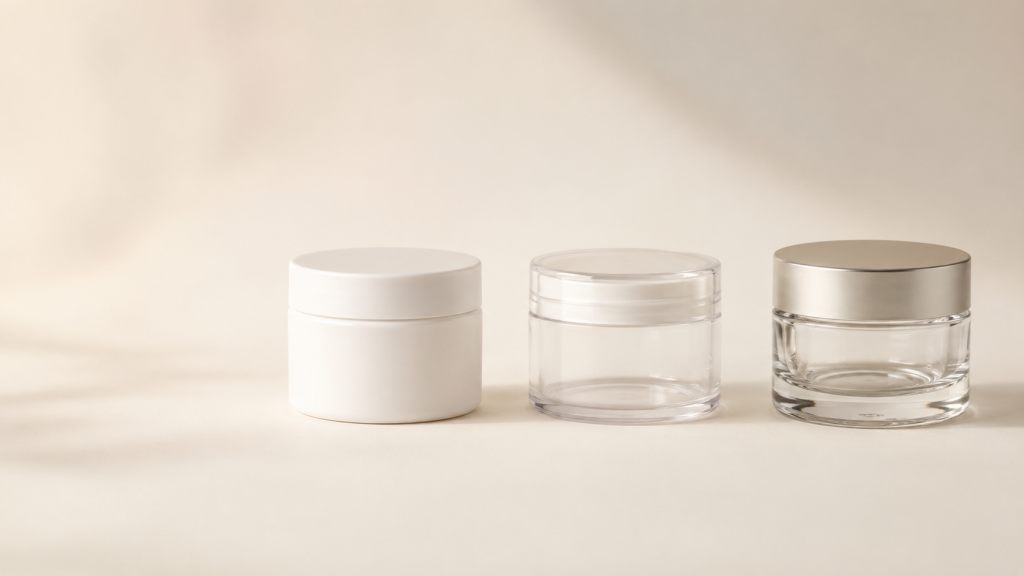
The material of a cream jar affects product positioning, visual appearance, transport weight, decoration options and overall cost. PP, PETG and glass are three common choices, but each material is suitable for different skincare products and brand objectives.
PP: Lightweight and Cost-Effective
PP is widely used for cream jars because it is lightweight, durable and cost-effective. It is commonly selected for brands that need reliable packaging for larger production volumes or value-focused skincare lines.
PP jars are usually opaque and can be produced in custom colors, making them suitable for products where transparency is not required. Double-wall PP structures can also create a more substantial appearance while maintaining a practical material cost.
PETG: Clear Appearance and Design Flexibility
PETG is often selected when a brand wants a clear, glossy or lightly frosted appearance without using glass. Its transparency can create a clean and modern look, making it suitable for skincare products that benefit from visible color, layered construction or a more refined visual presentation.
Compared with standard PP, PETG can offer greater flexibility for transparent packaging concepts and detailed decorative effects. It is commonly considered for mid-range skincare lines, especially when the brand wants a premium appearance while managing overall packaging weight and cost.
Glass: Premium Weight and High-End Positioning
Glass cream jars are often chosen for premium skincare products because they provide a sense of weight, clarity and quality. A thick glass base can strengthen the perceived value of a cream, mask or treatment product and support a more elevated retail presentation.
However, glass is heavier than PP or PETG, which can increase transport weight and require more careful packing. It is most suitable when premium positioning, visual impact and a substantial user experience are more important than achieving the lowest possible packaging cost.
How PP, PETG and Glass Compare
| Material | Best For | Key Advantages | Considerations |
|---|---|---|---|
| PP | Value-focused or high-volume skincare lines | Lightweight, durable, cost-effective, available in custom colors | Usually opaque and less premium in appearance than glass |
| PETG | Modern mid-range skincare packaging | Clear or frosted appearance, glossy finish, flexible design options | Material selection should be confirmed with the intended formula and decoration process |
| Glass | Premium creams, masks and treatment products | Heavy feel, thick-base appearance, strong premium positioning | Higher transport weight and more careful packing requirements |
How to Choose the Right Material for Your Project
Start by defining the position of the product in your skincare range. If the priority is practical cost control, custom colors and a lightweight package, PP may be the most suitable option. If the product needs a clearer or more contemporary appearance, PETG can provide additional visual flexibility. If the goal is to communicate a higher-end skincare experience, glass may be the stronger choice.
The final decision should also consider the formula, target capacity, decoration method, estimated order quantity and shipping requirements. Evaluating these factors together helps avoid selecting a material based only on appearance.
Discuss Your Cream Jar Requirements with FonQuen
Choosing the right cream jar material is easier when the product formula, design direction and order requirements are reviewed together. Share your preferred capacity, material, color, decoration idea and estimated quantity with FonQuen to discuss suitable packaging options.